Steve Marcus
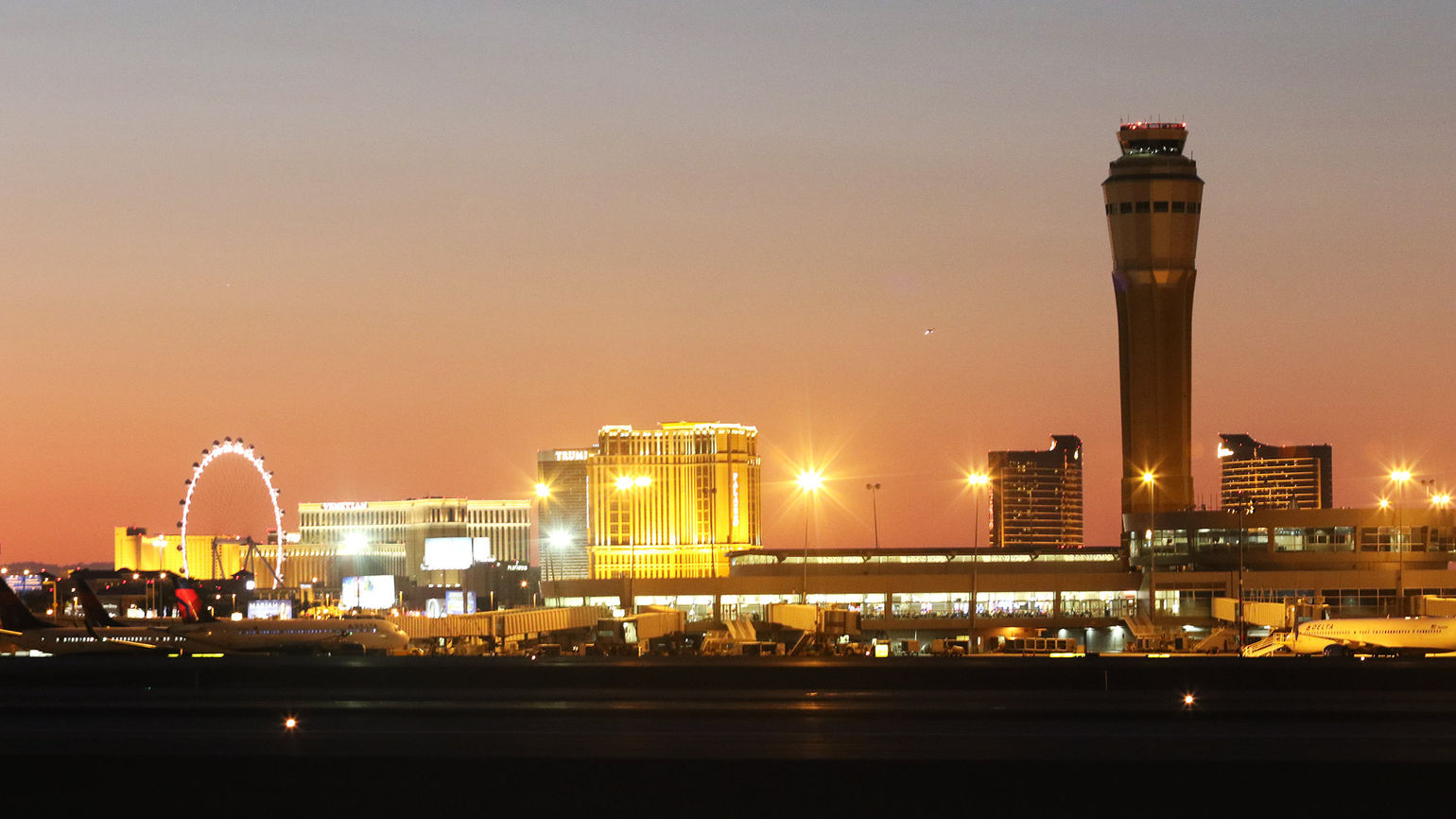
Christian Sanchez of Orlando, Florida waits for a Lyft ride in a rideshare pick-up area in the Terminal One multi-storey car park at McCarran International Airport on Thursday, May 20, 2021.
Sunday, May 23, 2021 | 2 a.m
When the Michigan couple visited Las Vegas last month, they had to wait almost an hour at McCarran International Airport for a lift to the resort corridor.
As they approached the line again on Tuesday, they were preparing for another lengthy delay in starting their stay. They were among a crowd of dozen or so lines in the ride-on area of Terminal 1 airport terminal.
“They say it’s about a 20-minute wait, which doesn’t seem too bad,” said Delane Boog, who had arrived at MGM Park minutes earlier with her husband Greg Boog prior to being on the Strip.
Depending on the day, time and location, longer waits for Uber, Lyft and taxi rides in Las Vegas have become common as visitor numbers increased this spring following business closings and capacity restrictions due to the coronavirus pandemic.
For Las Vegas, which prides itself on service and a positive visitor experience, it’s a phenomenon that, according to Clark County Commissioner Tick Segerblom, could last through the summer and negatively impact visitor reactions to their stay. The commission is the governing body of the strip.
“I’ve seen a lot of complaints lately,” Segerblom said. “I know that sometimes people have to get an upscale Uber or Lyft to get a vehicle.
We need more drivers and it may take a few months to catch up with us. “
Segerblom added, “Part of what makes Las Vegas great is that it’s so easy. The airport is close to everything and we had a great transportation system. If we lost that permanently, it would be a disaster. “
Las Vegas is set to be even more popular this summer as COVID-19 restrictions continue to lift across the country. And many domestic travelers will travel here because international travel is still largely dormant.
The Strip is already back in pre-pandemic times with overcrowded restaurants, throngs of pedestrians along Las Vegas Boulevard, and hotel occupancies rising like summer desert temperatures. Venue capacity limits and mask requirements for vaccinated people were lifted by the commission last week.
Carpooling seems to be on their heels.
“Demand has returned to the Las Vegas market very quickly,” said Javi Correoso, an Uber spokesman. “As people continue to be vaccinated, we believe the trend will continue for a city that attracts a lot of visitors outside of the city. Demand has returned faster than the drivers returning to the road, which has led to some of the problems that we have seen in this market. “
The problem is supply and demand: if visitors don’t go out during the pandemic, most drivers won’t work. Now people are going out again and not enough drivers have returned to the streets.
Industry officials attribute the shortage to several factors, including some drivers still receiving unemployment benefits and others unwilling to share a car with strangers during a public health crisis.
Uber and Lyft officials recognize the Las Vegas driver shortage issue, citing a state of emergency pandemic rule put in place by Nevada Governor Steve Sisolak as the main culprit.
Under state law, “transportation companies” like Uber and Lyft cannot charge a rate that is “higher than the base rate on file at the time of the emergency”.
With Sisolak declaring a state of emergency for the pandemic last year, carpooling cannot offer “dynamic pricing” options, which, according to drivers, encourage drivers to work certain peak hours because they can earn more.
Both Lyft and Uber are actively trying to get the Nevada Transportation Authority to change their dynamic pricing rules.
In a letter to the agency dated May 10, Elizabeth Gallagher, Lyft’s compliance manager, said: “Fares above the base rate by (carrier) may be distributed to drivers across the region in the form of driver awards and incentives will get drivers on the road during times of high demand. “
Meghin Delaney, the governor’s communications director, said the emergency statement will remain in place until the chief medical officer of Sisolak state informed Sisolak that the COVID-19 emergency had subsided.
“Although the situation is improving in the state of Nevada, COVID-19 is still with us and the governor’s advisors have not recommended ending the declaration of emergency,” she said.
While Segerblom and others wonder if companies should simply offer drivers more base salaries to attract more workers, Correoso said it wasn’t that easy.
He said many drivers returned to the workforce simply because they were concerned about getting COVID-19, even though Uber drivers and drivers still have to wear masks.
“What we’ve heard from drivers is that safety is still the main concern for them,” said Correoso. “Many drivers have not returned because they do not feel comfortable when someone is in the car. The more people vaccinated, the more drivers return, but we’re not where we were before the pandemic. “
Correoso added that Uber was incentivizing drivers for a cash bonus to return. A Las Vegas driver who drove an average of 20 hours a week took home just under $ 30 an hour, he said.
With the number of visitors increasing from month to month, the driver staff simply cannot keep up.
According to the Las Vegas Convention and Visitors Authority, more than 2.2 million people visited the city in March, up 45% from February. When the April visit numbers are released later this month, they are expected to dwarf the March totals.
In addition to car ridesharing, Las Vegas taxi companies have a hard time getting drivers onto the road.
JD Decker, interim director of the Nevada Taxi Authority, the agency that regulates the 16 taxi companies operating in the state, said it would take some time to get the industry going after it was basically dormant for months.
“We’re seeing problems getting drivers into cars, but companies are trying to hire them,” Decker said. “I think we are probably suffering the worst right now. After being in isolation for so long, people are returning to Las Vegas, but the taxi companies haven’t caught up yet. It will return to normal, but it will take time. “
How much time is left, nobody can guess.
Decker said he is aware of the complaints about waiting times that have come in from the public. He’s also heard from Las Vegas casino officials inquiring about what could possibly be done to improve the situation.
“It takes longer to get rides, but visitors to Las Vegas tend to find their way,” Decker said. “Drivers bringing drivers to and from McCarran get extra money, and some companies pay part of the car approval fees. Companies know there is a problem and they are trying to figure out how to fix it. “
With Memorial Day weekend on the horizon and summer vacation travel expected to be busy, the driver shortage could potentially worsen.
According to the authority, just under 897,000 taxi rides were registered in April.
That’s far more than the 12,200 trips recorded in April 2020 during the height of the pandemic shutdown, but still around 275,000 fewer trips than the 16 taxi companies recorded in April 2019.
In addition to taxi companies and ridesharing, Las Vegas also offers public transportation.
The Southern Nevada Regional Transportation Commission provides a bus route – the Maryland Parkway route – that connects to the airport.
From this line, passengers can connect to the Commission’s “Deuce on the Strip” line, which runs up and down from the South Strip Transit Terminal near the McCarran Rent-A-Car Center to the north to the Fremont Street Experience.
Francis Julien, RTC’s deputy CEO, said the problems with ridesharing and taxi drivers underscore the importance of public transportation in Las Vegas.
He said there were cameras at bus stops so staff could monitor the crowd. If too many drivers wait, Julien said, the RTC will add vehicles.
“For the past couple of Fridays and Saturdays, we’ve had a bus every eight minutes that went down the strip when needed,” said Julien. “People don’t have to wait 30 minutes. Basically, we attribute the gains (in drivers) we’ve seen over the past four or five months to tourists. The Deuce line double decker buses also provide an amazing way to experience the tourist corridor. “
Julien said cell phone users actually have the option in the Uber or Lyft app to purchase an RTC bus ticket without having to leave the ridesharing app they are using.
Even so, not everyone has the desire to drive a city bus, even a cool-looking double-decker version. Many drivers have got used to the convenience of carpooling in recent years. And greeting an Uber or Lyft these days isn’t always difficult. Much depends on time and place.
On Tuesday, a few steps from the Boogs, Timothy Esposito and Kaylenne McClure, both from Los Angeles, were waiting for their Lyft after arriving from Southern California.
On McClure’s phone, the Lyft app revealed that the couple only had to wait a few minutes for their ride.
“We know things are opening now, so we knew we might have to wait longer,” said McClure. “But that’s not bad at all.”
Segerblom said what happened to strip transportation options was a good reminder of the “Law of Unexpected Consequences,” adding that the longer waiting times were the result of a free market problem that likely needed a free market solution .
“Before Uber and Lyft, we had a great taxi system for the Strip, although it wasn’t great if you weren’t on the Strip,” Segerblom said. “When Uber and Lyft came in, they basically decimated the taxi industry here. We introduced this unregulated industry and are now paying for it. My thought is that we might have to try to restrict Uber and Lyft so we can keep our taxi and bus system working just in case something happens. “
A spokeswoman for the Nevada Resort Association said the organization hadn’t heard any complaints from its members about ridesharing or taxi waiting times at their homes. Representatives from the major strip gaming companies had no comment.